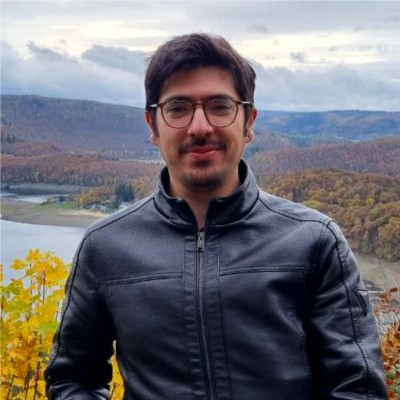
Behzad Mohebbi
Director, R&D – Grooming Analytical & Measurement Science Procter & Gamble
Agenda Day 2
3:10 PM Accelerate Discovery by Connecting Data and Predictive Models with Self- Driving Laboratories
As digital modelling expands the experimental possibilities available to R&D,
laboratory execution risks becoming the next bottleneck. This case study will
explore how physical AI, flexible automation and orchestration can connect
predictive models with physical experimentation to create faster, more
adaptive discovery workflows.
• Accelerate discovery by using physics-based simulation and neural
networks to prioritise the experiments most likely to deliver valuable results
• Enhance laboratory flexibility by replacing rigid automation with adaptable systems
that work across formulations, chemistries, analytical methods and devices
• Minimise experimental iteration by feeding laboratory results back into
predictive models to continuously improve future recommendations
Check out the incredible speaker line-up to see who will be joining Behzad.
Download The Latest AgendaIn Partnership With:

QUESTIONS?
Address: IQPC Ltd, 129 Wilton Road,
London SW1V 1JZ
Telephone: +44 (0) 207 368 9484
Fax: 44 (0) 207 368 9301
Email: exchangeinfo@iqpc.com

©2026 IQPC. All rights reserved.


